Adeline Blomfield had been planning her wedding her entire life. A massive party, a beautiful location, a ceremony at her temple, surrounded by all her friends and family. When her boyfriend, Jakob, proposed last March, kneeling in a field behind his house in Canada, the world as Adeline knew it was shifting. Not because of her transition to married life, but because the Covid-19 pandemic, which has affected the globe for a majority of 2020, was starting to snowball.
Adeline and Jakob met four years ago, when she was 15 and he was 17. They stayed friends over the next three years while Adeline finished high school and Jakob went on a two-year mission trip to Manitoba, Canada, for the Church of Jesus Christ of Latter-day Saints. Last fall, both moved to Idaho to attend Brigham Young University, and soon reconnected and started dating.
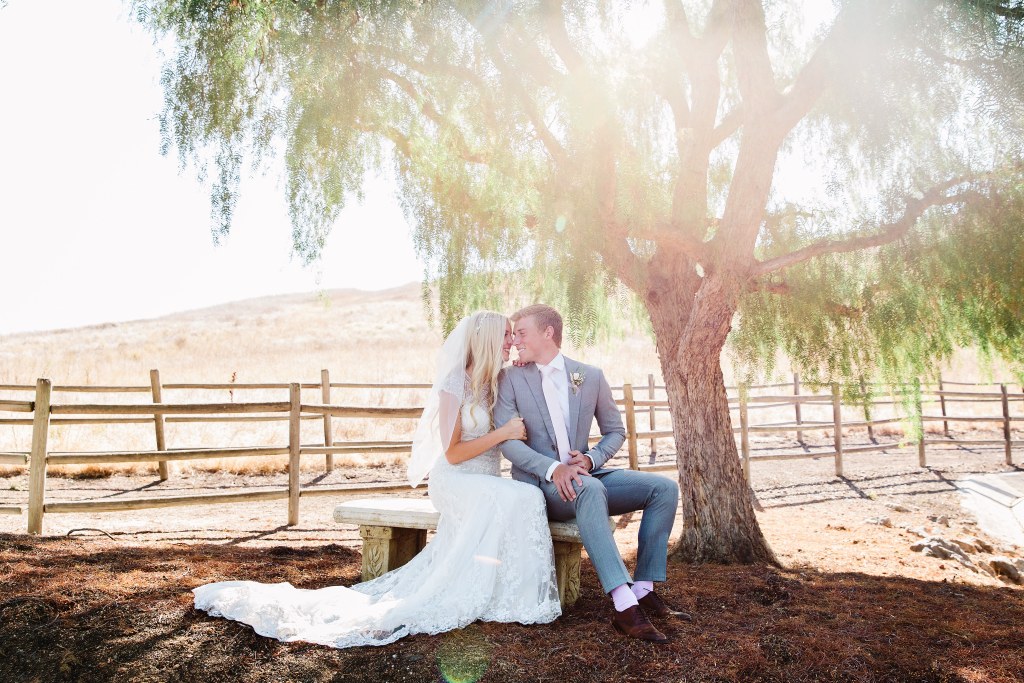
After Jakob’s proposal in March, the couple began planning their wedding. The world around them was still rapidly changing, and Adeline was living with Jakob and his family in Canada, away from her family in Los Angeles. All of their plans were suddenly tied to the US-Canada border opening. For five months they made plans, but when they realized the border wasn’t going to open soon and Adeline’s family wouldn’t be able to attend the wedding in Canada, the couple came up with a new idea: a wedding ceremony at the border.
“All of it was really stressful, I guess, because we couldn’t have any plans that were set in stone for the longest time,” Adeline said. “It was probably a week before we actually got married when we figured out the border idea. We had a date that we wanted to get married on and it was just trying to figure out the best way to get both of our families there and get married the best way.”
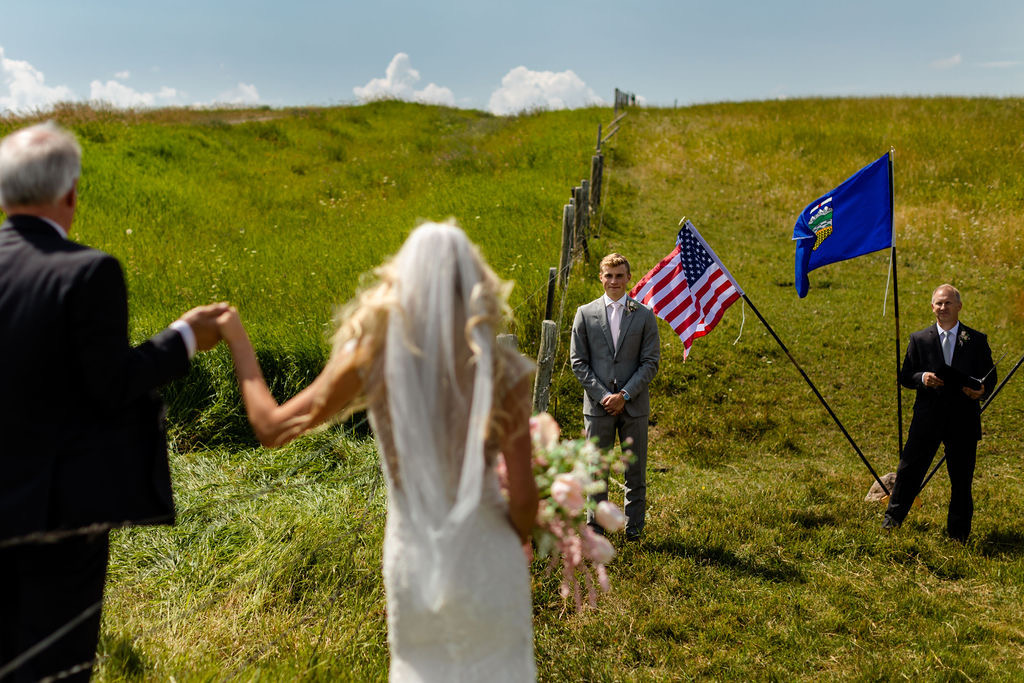
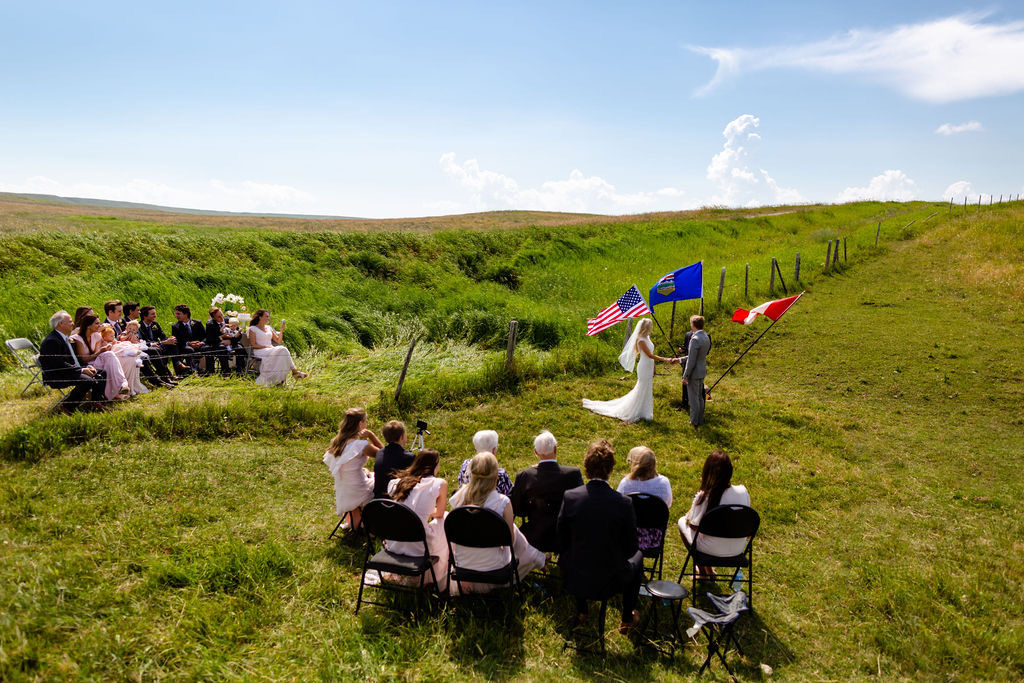
The couple researched their options, contacted Border Patrol, and worked out a feasible plan. The spot where the wedding was held was located on a stretch of land owned by two farmers, and with their permission the couple brought their immediate families to the border between Montana and Alberta to witness their union. About 30 people gathered there on July 30, with Jakob’s father performing the ceremony.
“Although it wasn’t what I expected, I honestly liked it a lot more and I thought it was more special,” Adeline said. “It kind of brought the true meaning of getting married, just having your family there and then getting married to the person you love. It was really nice.”
The threat of the pandemic loomed in the peripherals of everyone’s vision all summer. For many, the thought of attending a wedding with even 20 people was unrealistic. Weddings around the world were cancelled, venues lost money, event planners and florists lost jobs.
In March, Boston wedding planner Kate Murtaugh was preparing for her first weddings of the season. When Covid-19 was named a pandemic, she worked with the couple to push their wedding back to July. “At the time we obviously had no idea what would happen,” she said. “We said ‘oh, it’s so far off, we’ll be fine.” But as July approached, the couple decided to postpone their wedding indefinitely.
Over the summer, Murtaugh and her team have planned socially distanced “micro-ceremonies” for clients, where only immediate family is present, or elopements where couples can, for instance, get married alone on a boat where the captain performs the ceremony.
As of September 29, Massachusetts Governor Charlie Baker set a limit of 50 people at gatherings at private residences. Ruth Jones, Commissioner of the Quincy Health Department, sends inspectors out when a complaint is filed over events in Quincy. “Any facility that has over 50 people has to now notify the Health Department of the event and give us particular information,” she said. If a venue is caught with more than 50 people, they are given a fine by the inspector.
All of Murtaugh’s clients pushed their weddings to next year except for one, who decided to find a creative solution for their September wedding. They spread their wedding out over two days, held the celebration at the bride’s family home on the South Shore, and invited around 30 people per day. Originally the wedding was to be held on the Cape with a guest list of over 200 people, but the couple said that in the end they couldn’t imagine having it any other way.
“I think intimate is okay right now,” Murtaugh said. “Being responsible and adhering to current CDC recommendations is absolutely paramount. But what I think the pandemic has done is shown others that doing something intimate can be just as beautiful and special.”
 isabel sami